Beyond the three thesis anchors, I work on or actively explore the following directions across astrophysics,
nonlinear dynamics, fluid and plasma physics, behavioral data, and condensed matter.
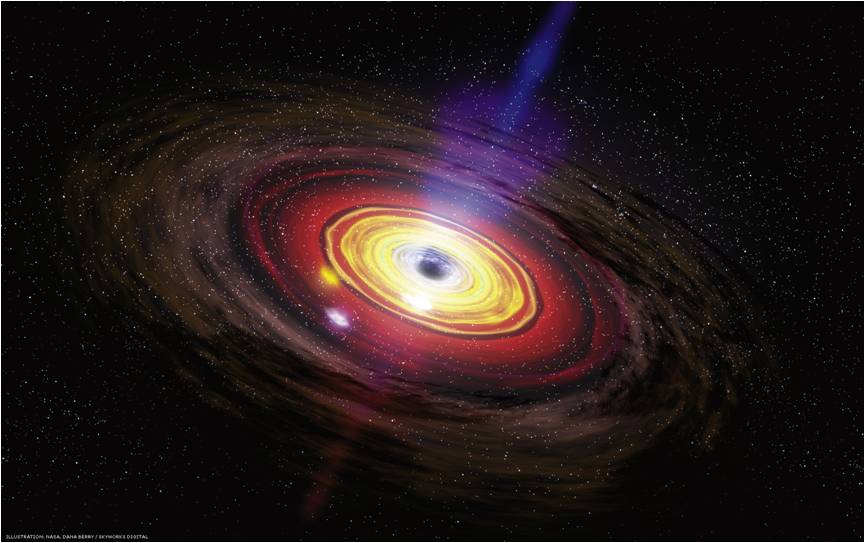
Active Galactic Nuclei
Topological, geometric, and multiscale descriptors of AGN variability and host-galaxy structure,
with the goal of connecting morphology and temporal behavior to nuclear activity.
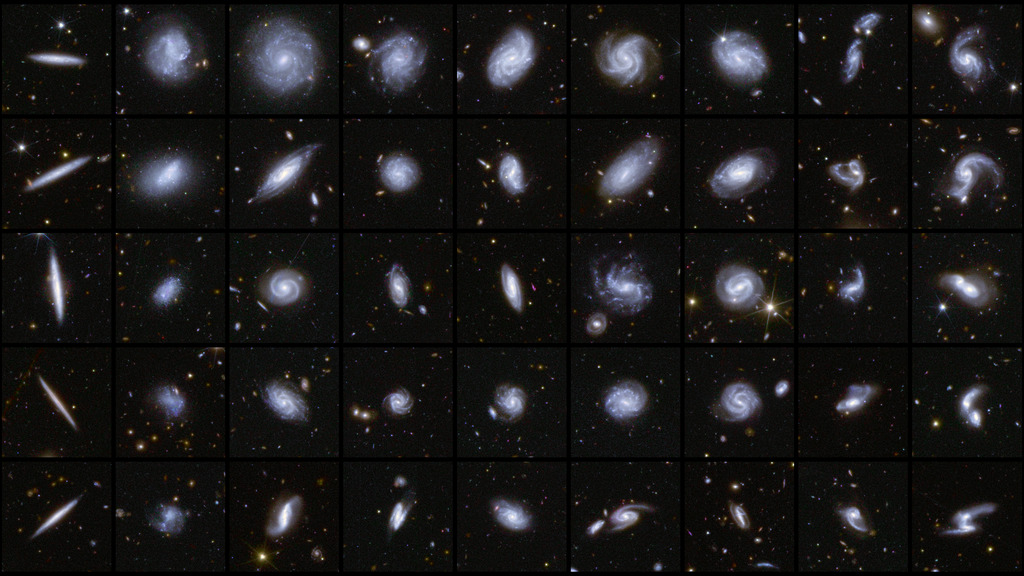
Galaxy Morphology
Persistent homology and representation learning for robust, interpretable descriptors of galaxy images,
including unsupervised and self-supervised approaches.
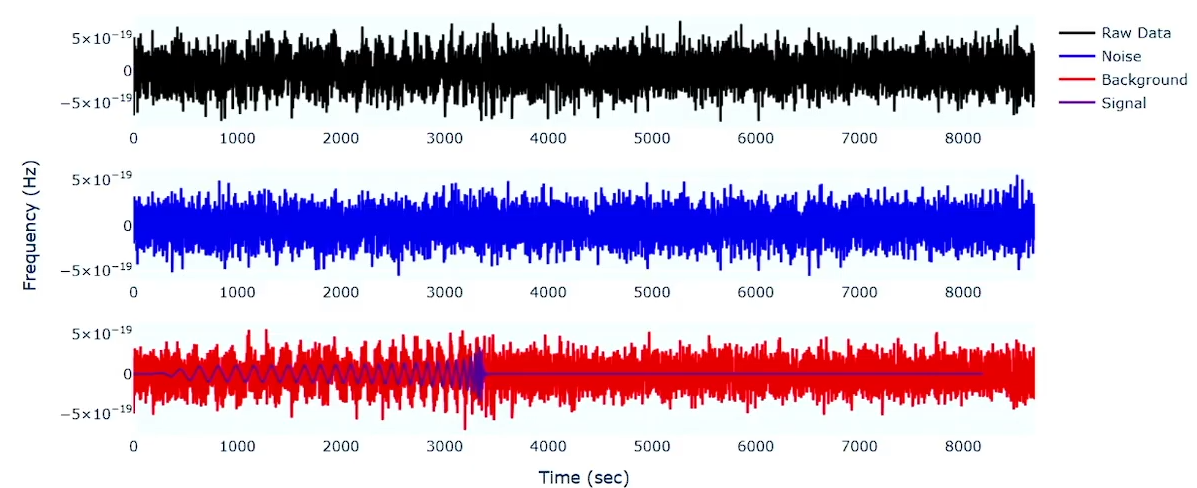
Gravitational-Wave Detection
Topological summaries of noisy gravitational-wave-like time series across signal-to-noise regimes,
including sensitivity to physical parameters and robustness to noise.
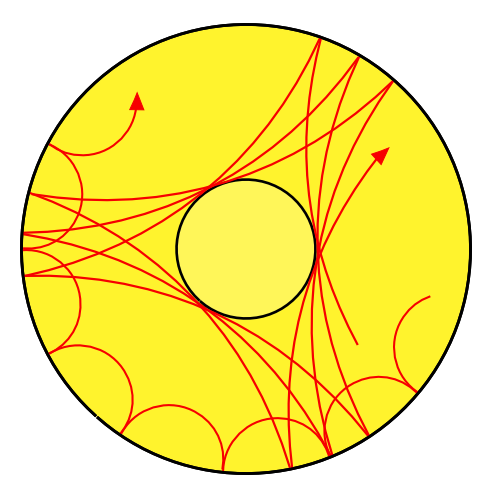
Asteroseismology
Topological representations of oscillation spectra and stellar variability, seeking links between
mode structure, stellar parameters, and multiscale geometric organization.
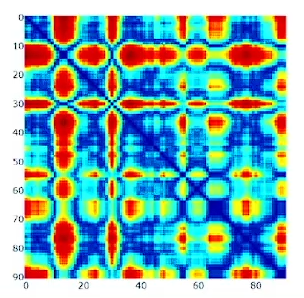
Dynamical & Complex Systems
Delay embeddings, persistent homology, Mapper, and recurrence methods for nonlinear dynamics,
attractors, transitions, and higher-order organization.
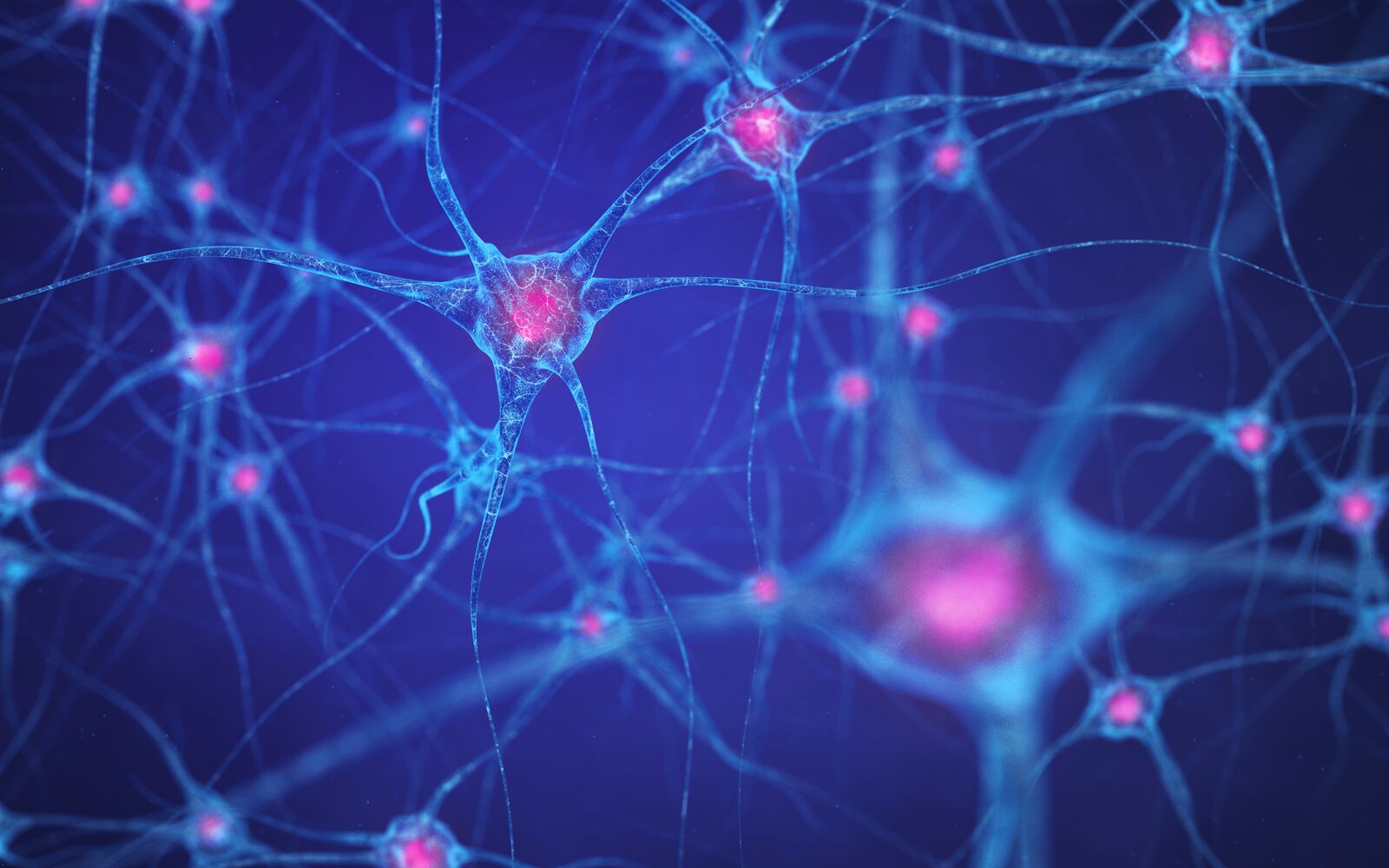
Behavioral Learning
Statistical, geometric, network, and topological analysis of movement patterns during learning tasks,
with emphasis on spatial strategies and behavioral transitions.
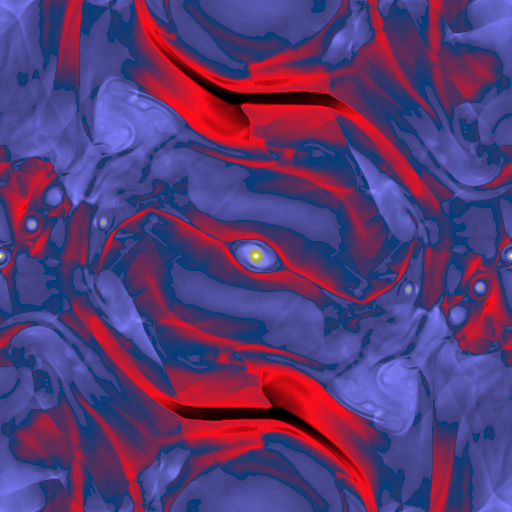
(Magneto)hydrodynamics
TDA and scientific machine learning for shocks, vortices, reconnection, turbulence, and the validation
of data-driven predictors for fluid and plasma dynamics.
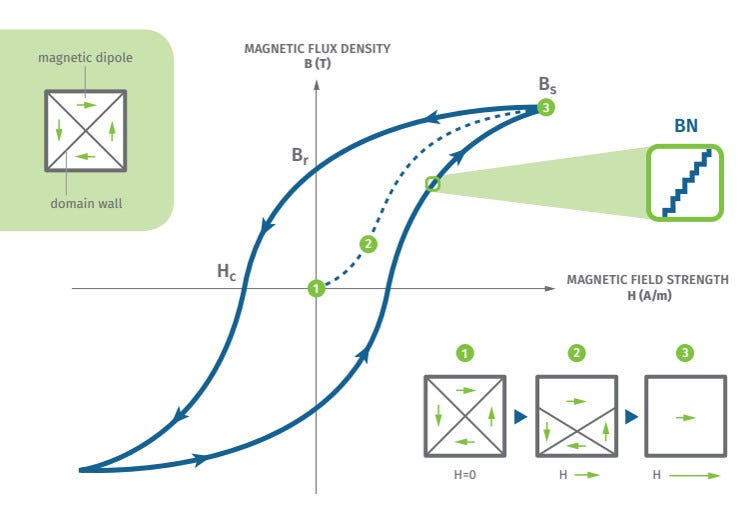
Barkhausen Noise & Disordered Media
Persistent topology of avalanche-like signals and disordered systems, connecting homological
signatures with statistics, criticality, and domain-wall dynamics.
Phase Transitions
Topological and Morse-theoretic approaches to changes of regime in lattice and statistical-mechanical
models, with attention to critical behavior and order-parameter structure.